April 1, 2026

Post clock to stand as sentinel at Main St. Park
News Editor The Lexington Rotary Club has always looked to do special things for the community to mark its milestone years, and the club is planning something no less special this year to celebrate its 100th anniversary.
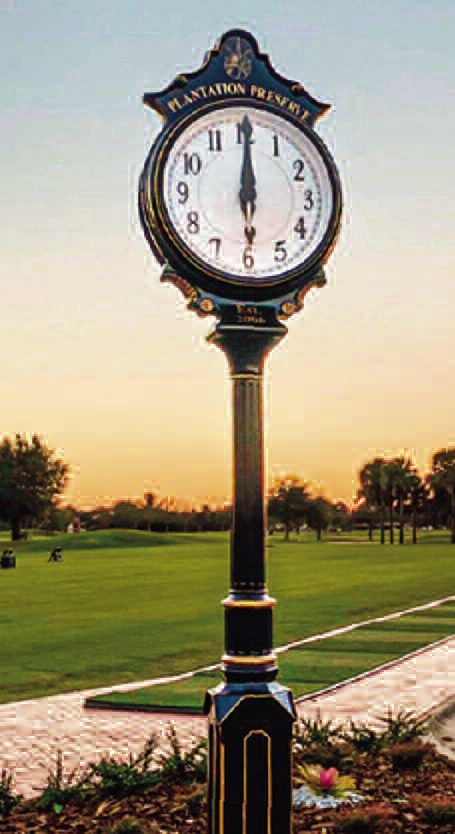
The club is spearheading efforts to bring a Howard Replica II 4Z Post Clock to the Main Street Park.
The clock — which will stand around 11 feet tall — is being custom-built by the Verdin Company of Cincinnati, Ohio, a fifthgeneration business that has been making clocks since 1842.
Construction of the clock began in January and is expected to be wrapped up by mid-March.
Installation of the clock, which will find a permanent home in front of the gazebo, is planned for late April to coincide with the date of the Rotary Club’s centennial anniversary.
Rotarian Dave Rich has been working on the project for the last three years. The excitement in his voice when he talks about the clock is palpable.
“It’s going to be a great thing for the community. The clock will be visible from both ends of Main Street,” remarked Rich.
Rich pointed out that the project represents a joint effort between the Rotary Club and other local organizations and individuals. The club and the Community Fair Board teamed up to purchase the clock for $20,000, with the club contributing $12,000 toward the effort. To purchase the chimes — which cost an additional $4,200 — Rotary was assisted by the Lexington Community Betterment Association and the Nadler Family Fund.
The two-faced, weatherproof clock will boast many unique and beautiful features, explained Rich, including LED backlit dials that will take on the appearance of a full moon when lit.
The Rotary logo will appear on each dial, which will be more than two feet in diameter. The post will be aluminum.
According to the Verdin Company Web site, American “street” or “post” clocks were an early form of advertisement adapted from popular public clocks of Victorian England. They first appeared in the eastern United States about 1870.
“Then and now, street clocks stand out against buildings and signage, and are frequently placed in front of city halls, train stations, banks, jewelry stores, and other public locations,” the site notes.