April 1, 2026

Blast From the Past
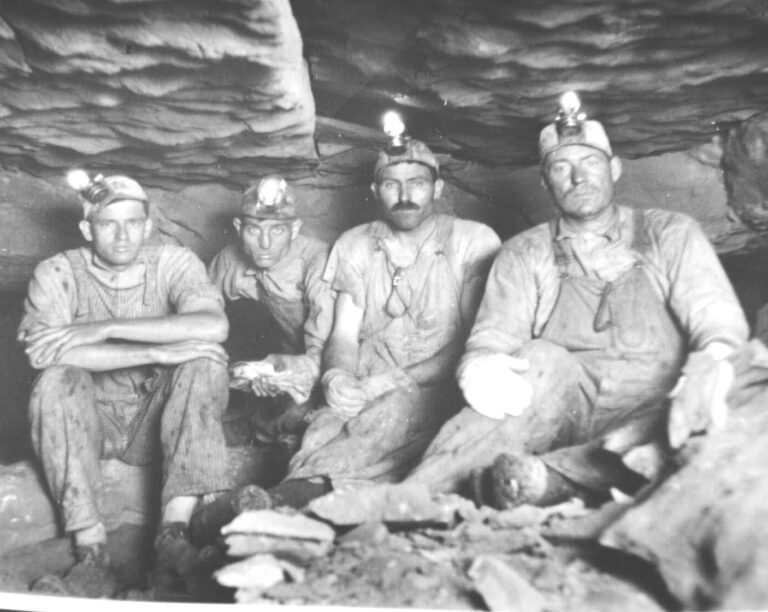
The greatest influx of immigrants into Lexington came at the turn of the last century as the city’s population more than doubled from 1900 to 1915.
The cause of this increase was due to the coal mining industry. About 1900 the Western Coal and Mining Company began to dig deep shaft mines; up to that time there were several slope mines in Lexington.
How the need for workers became known to the people in Europe is not known, although a few Italians were working in the mines of Osage and Pittsburg, Kansas. Since those mines were also opened by the Missouri Pacific Railroad as those in Lexington, it is apparent that some of the workers migrated to Lexington knowing they would have a job. At the turn of the century there were six to eight Italians in Lexington but by 1914 there were close to 500 men, women and children.
One of the interesting facts about the migration of Italians to this area is the fact that they all came from northern Italy, while two thirds of these families came from the same community.
As soon as word reached the community in Italy that workers were needed in the mines, men applied for a passport. No recruitment was made by the coal company. Each person that came paid for his own transportation. Many had to borrow the money with the promise to repay. Usually the husband came first, found a job and a place to live then sent for his wife. Relatives usually followed. The good part about most of the Italians coming from the same community was they had friends to talk with; the bad part was that there was no urgency to learn the English language.
These Italians were proud of their children, and schooling was one of their primary concerns.
There were enough Italians in Lexington that the Traders Bank for several years had printed an almanac and journal in the Italian language for its customers. The back cover of a 1922 copy advertises safety deposit boxes for free to its clients, travelers checks, transfer of money to foreign countries, and the Landis Christmas Club.
Probably about 1912 or 1914 the French and Italians organized a cooperative grocery store in order to save money on the cost of groceries. There probably was a small cost for becoming a member.
Of course the store was open to the public so the price of groceries was the same for everyone. It was located on the corner of Franklin and 11th, across from what is now called the LEX Auditorium.
As long as the coal company kept sinking new mines, the population of Lexington continued to rise. Around 1920 the population of Lexington was close to 7,000. One thousand of these were miners. About 1920 the last deep mine shaft was in operation. This was the seventh mine of the Western Coal and Mining Company; by this time three of the mines had already been worked out. The company announced this would probably be the last mine they would sink as the cost of sinking was becoming prohibitive. Also, they were running out of the profitable veins of coal.
In the early 1920s transportation became a problem for the miners to get to the mines. Before the popularity of automobiles, many miners walked the 2 or 3 miles to work. About that time the railroad and the coal company secured a train that would pick up the miners at three or four points and for a small fee they would be taken to work and back.
About 1920 the children of these immigrants came of age — some went to high school, some to college. Some wanted to work, but not in the coal mines. Thus, migration started out of the city. Some went to the large cities in the East, others scattered in all directions. Often the parents, only in their late 40s, followed the children.
These Italian immigrants were rarely in trouble with the law. They were also careful with their money. During the Depression not a single Italian lost their home. Two or three of these Italians were members of a Lexington Community Band. During World War I the Italians bought hundreds of dollars worth of Liberty bonds. Some of the younger ones were in armed service.
These Italians were a fun-loving bunch who built courts and played bocce. They organized the Italian lodge for both a social life and for mutual fraternal help. The lodge hosted a picnic in June that was open to the public and featured dancing, games and beer, while in the winter they hosted a dance for members and families only.
These Italians left an indelible imprint on Lexington, and their impact can be felt to this day.