LCRSP members attend MRTA Region 5 meeting, many concerns raised about taxes, budget
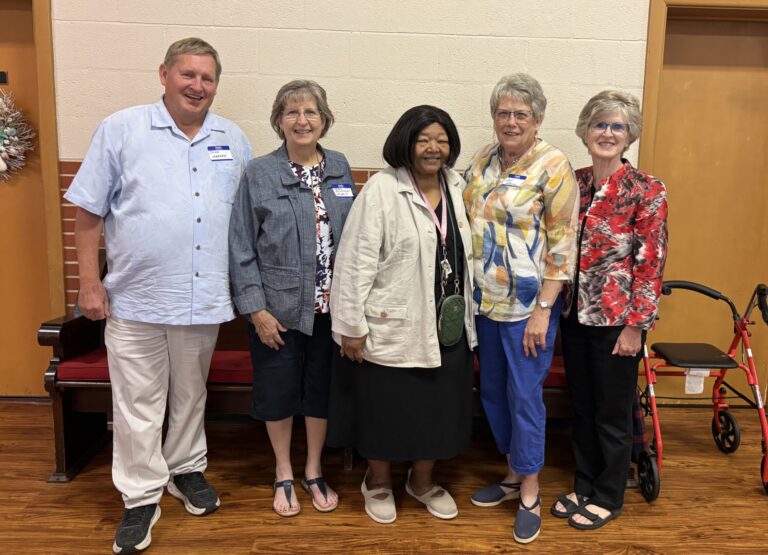
On Thursday, June 4, 2026, Lafayette County Retired School Personnel officers John Morgan (President), Carol Struchtemeyer (VP), Gail Lilleman (Treasurer), and Amy Chambers Thieman (Secretary), along with Region 5’s Distinguished Retiree Award Winner, Evelyn Trigg, attended MRTA’s Region 5 Annual Meeting. It was hosted by Cooper County Area Retired Teachers and School Personnel at the Evangelical United Church of Christ in Boonville. Breakfast treats and lunch were served. Door prizes and gift bags were presented. $500 was raised in a raffle enough to fund one MRTAF classroom grant. The meeting began at 10 a.m. and was adjourned about 2 p.m.

MRTA – Missouri Retired Teachers and Education Employees Association – is the largest and only education association whose main focus is to protect the PSRS/PEERS retirement systems of Missouri public educators and support staff – as well as advocating for Missouri public education. MRTA is non-partisan and non-profit.

LCRSP is the local education arm of MRTA. Membership in MRTA and LCRSP is open to retired teachers and support staff, active teachers, all spouses, and the general public.

Region 5 encompasses Carroll, Chariton, Cooper, Howard, Johnson, Lafayette, and Saline counties, as well as what is called the Sedalia Community, and State Fair Community College.

Region 5 Vice President Wendy Bernier and Cooper County President Margaret Scott gave welcome speeches. MRTA President Virgie Cook and the Regional Chairs of the Legislative, Community Service, Membership, and MRTA-Foundation gave reports. Kell Smalley presented information on AMBA (American Membership Benefits Association). “Teaching the Body to Keep Moving and Learning About Parkinson’s Disease” was presented by the featured speaker, physical therapist, Mitchell Hackman.

MRTA Executive Director Maria Walden and Missouri House Representative (District 53) Terry Thompson both spoke of concerns regarding legislation passed by the 2026 Missouri Legislature. Especially concerning is Amendment 5 which will be on the ballot Aug. 4. This amendment would eliminate income taxes – which provide 65% of Missouri’s General Revenue – providing over $8.4 billion each year – and replace it with sales and usage taxes. This legislation could leave major shortfalls in funding for public schools and other essential services Missourians rely on – such as roads, emergency services, medical care, corrections, etc.

Sales and use taxes are regressive taxes, which take a larger percentage of income from fixedand low-income earners than from high-income earners. This would increase the tax burden on many Missourians who can least afford it – retirees, the poor and middle class. Sales and usages taxes would be on any service one might need – auto and house repairs, medical care, haircuts, etc., – and every good purchased. The maximum sales tax in Missouri currently is only 4.7% and estimates show if Amendment 5 passes, it could rise to 18.6%. If passed, Missouri residents also will have no future say in what is taxed or at what rate. Amendments to the Constitution are almost impossible to repeal.

Also of great concern is the 2027 budget which underfunds Missouri public education by $190 million. $118 million of that is not guaranteed due to unsure, uncollected and declining amounts of revenue from gambling, gaming, and tobacco taxes. Continued underfunding can strain school districts, reduce opportunities for students, and lead to staff reductions, closures and consolidations. Missouri schools are already hurting. Rep. Thompson sadly announced that all schools in his district will be deficit spending next year.

Also worrisome is the increased funding for Empowerment Scholarship Accounts (ESAs) aka MOScholars – more commonly referred to as vouchers – which help parents send their children to private or parochial schools. Data shows these are going to rich families in Kansas City and St. Louis, not students in small, rural schools. After $50 million was set aside in 2025, lawmakers in 2026 approved an additional $10 million for the program while underfunding public schools. Another $50 million was set aside for Charter Schools. Vouchers and charter schools redirect public tax dollars to schools where there is limited oversight and accountability. Any harm done to public schools will hurt their communities, too.

Another concern for schools is the underfunding of transportation. Though the wording from the Legislature is “fully funding transportation,” the money allotted is only 25% of what districts will pay to provide bus services. The current higher gas and diesel prices will really eat into that already strained budget.

For more information on these issues, MRTA or LCRSP, go to mrta.org or call 1-573-634-4300.